“Good ethics is good business” is a belief that has guided our improvements in social and environmental performance over the years and has inspired us to continue to take steps forward in our approach to sustainability, transparency, and accountability.
Last updated: October 2025
Our Sustainability Strategy

Our sustainability strategy centers on the issues that most influence long-term growth, risk management, and stakeholder value. Guided by the Global Reporting Initiative (GRI) Standards and input from ten stakeholder groups, our materiality assessment identified 15 environmental and social priorities. From these, we focus on four with the greatest strategic impact—Product Design and Innovation, Climate Change, Talent Attraction and Retention, and Diversity, Equity & Inclusion. These priorities anchor our sustainability strategy framework, guiding investment, resource allocation, and progress tracking across our brands, with annual reporting aligned to recognized ESG standards.
For detailed disclosure about our materiality assessment, please refer to the 2021 Sustainability Report.

People
Our workforce, community, and customers are the primary drivers of our ongoing sustainability journey and the center stage of our Company. We are committed to creating meaningful experiences that resonate with people and embody the positive impact we aspire to achieve.

We place a strong emphasis on employee health and well-being as a foundation for engagement and performance. Our teams receive competitive compensation and comprehensive benefits, including medical, dental, vision, life, and disability coverage. In 2024 we enhanced U.S. benefits with new medical options, expanded leave, and added programs such as critical-illness and pet insurance. Our leave policies ensure leave entitlements, such as dependent care and parental care, as required by state and federal law.
Recognizing the vital need for accessible mental health support, we prioritize enhancing the mental health benefits available to our employees. We promote mental health awareness through regular outreach to employees including emails and webinars discussing mental health and programs to assist in mental health awareness. Through Spring Health, employees and their families receive 24/7 confidential support in the form of real-time comprehensive assessment, personalized care plans, and guided navigation to licensed professionals. A dedicated wellness coordinator now oversees programs across all brands, ensuring consistent access to physical, mental, and financial wellness resources that help employees thrive and strengthen our company’s long-term success.


Callaway Golf Company Foundation
The Callaway Golf Company Foundation, founded in 1993, supports communities in need via cash grants, matching gifts, and a “Dollars for Doers” program for selected non-profit organizations while providing opportunities for employees to actively contribute to community well-being.

Callaway Community Giving Program
Since its inception in 1995, the Callaway Community Giving Program has supported San Diego–area nonprofits through monthly volunteer initiatives led by employees at our Carlsbad headquarters. Championed by a 12-member committee, the program partners with organizations focused on environmental conservation, youth development, homelessness, underserved populations, animal welfare, and support for military families—reflecting our ongoing commitment to making a positive local impact.
Planet
Environmental sustainability is core to our business and long-term value creation. Our efforts to foster a healthier planet center on three key areas: combating climate change, reducing water consumption, and responsibly managing waste. Across our operations, we consistently explore opportunities to expand renewable-energy use, improve efficiency, and enhance recycling. We also invest in nature-based and biodiversity projects that help mitigate climate impacts and build a more resilient future for our business and the communities we serve.
 Energy consumption is the primary contributor to the greenhouse gas emissions from our operations. In line with our ambition to minimize our carbon footprint, we are actively exploring opportunities to improve how we manage and use energy within our operations and reduce our reliance on fossil fuels. This encompasses initiatives focused on improving energy efficiency and expanding the use of renewable energy.
Responsibly managing energy and maximizing the efficiency of our operations is a collective commitment and shared understanding at Callaway Golf. Our cross-functional teams, spanning facilities, operations, supply chain, logistics, and more across each region, collaborate on identifying and implementing best practices to enhance energy efficiency.
Facilities Energy Management
 At Callaway Golf’s ball manufacturing facility in Chicopee, Massachusetts, we continue to modernize operations to improve energy efficiency and cost performance. Over the past five years, we’ve replaced legacy equipment with higher-efficiency models, holding total energy use steady while nearly doubling output. The facility is also transitioning fully to LED lighting, and a new chiller installed in 2023 reduced annual electricity use by 280 MWh. By the end of 2024, a 4 MW natural gas fuel cell system will begin generating on-site power, expected to cut approximately 1.9 million pounds of CO₂ emissions per year and enhance operational resiliency through greater energy independence.
Renewable Energy
 To further mitigate greenhouse gas emissions from our operations and reduce dependence on fossil fuels, we have consistently invested in renewable energy solutions across all our brands. At our corporate headquarters in Carlsbad, California, we have increased renewable energy consumption from 40% in 2021 to 60% in 2023, with a target to achieve 100% by 2027 through the direct access energy procurement program. Moreover, the facility is outfitted with a battery storage system that charges during off-peak hours, aiding in powering the building during peak energy demand periods and alleviating strain on the power grid. At Callaway Golf South Pacific, the facility is now powered in part by rooftop solar panels and equipped with on-site EV charging stations. The solar system supplies over 30% of the facility’s electricity needs, helping to avoid roughly 85 tons of CO₂ emissions each year.
Logistics Energy Management
 We continue to enhance logistics efficiency through three key strategies: partnering with fuel-efficient carriers, optimizing container use, and minimizing air freight. In North America, SmartWay carriers now account for 98% of truck-based shipments, up from 50% in 2016.
Consolidating shipping across brands has improved efficiency on a ton-mile basis, while packaging redesigns and nesting solutions further increase container utilization. We closely monitor air shipments to limit them to business-critical needs, with 95% of customer parcels now shipped via ground transportation.
Callaway Golf Europe requires that every new fleet vehicle has a lower emissions output than its predecessor. In the UK, the percentage of hybrid or electric vehicles in the fleet increased from 24% in 2020 to 67% in 2024.
Climate-Related Risks and Opportunities
We employ a comprehensive approach to identify, assess, and manage various types of risks that we may encounter. Among other internal and external factors, we face risks in the following four categories: operations, manufacturing, and technology risks; regulatory and compliance related risks; financial and tax risks; and industry and general economic risks. To assess and identify risks across different areas of the business, we utilize an Enterprise Risk Management (“ERM”) process. This process is planned to occur every other year and involves a third-party consultant interviewing key members of management about risks, followed by discussions to categorize the severity and likelihood of identified risks. While the ERM analysis follows a structured schedule, operational-level risk assessments are ongoing, and mitigation strategies are subject to updates based on changing circumstances.
We acknowledge that climate change is one of the defining global issues that we face today and has a far-reaching impact on people, communities, and businesses. Operating globally across apparel, manufacturing, and entertainment sectors, we navigate unique challenges and opportunities associated with climate change. Climate-related risks are integrated into our comprehensive risk assessment and management procedures, through which we have identified the following climate-related risks the Company faces. 
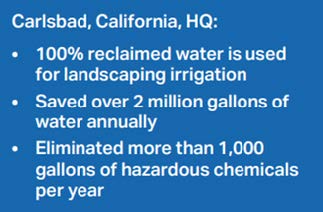
 Upholding responsible waste management practices is crucial for the long-term wellbeing of our planet, and we have integrated three core strategies – reduce, reuse, and recycle – into our daily operations to minimize our impact. Our commitment to reducing waste involves optimizing manufacturing efficiency and implementing waste reduction measures in our offices, warehouses, and other facilities. Additionally, we maintain partnerships with recycling facilities globally, emphasizing the minimization of waste sent to landfills.
We actively monitor both hazardous and non-hazardous waste and ensure we comply with relevant regulations regarding waste management. Across our global operations, we are collaborating with local partners to maximize recycling opportunities. Our recycling practices cover a range of materials, including cardboard, paper, metal, electronic waste, plastics, and wood. For electronics, we partner with organizations that hold the R2 Responsible Recycling Standard for recyclable electronics where applicable, ensuring that electronic waste is managed in strict adherence to, or surpassing, regulatory requirements. In Monterrey, nearly all materials are recycled or reused through a single-stream recycling program for cardboard and metal as well as a partnership, started in 2023, to recycle plastics. Wood pallets are consistently reused at the Monterrey facility.
Product
 Across our diverse portfolio of brands and products, we procure a range of raw materials from both domestic and international suppliers. For golf clubs, we source steel, titanium alloys, and carbon fiber, while for golf balls, we utilize synthetic rubber, thermoplastics, and zinc compounds. Our apparel and footwear lines feature materials like cotton, wool, rubber, and various synthetics. Our commitment to sustainability propels us to continually innovate with eco-friendly materials, including crafting products from recycled materials and responsibly sourcing raw materials.
 TravisMathew’s Eco Collection, includes boardshorts, polos, and T-shirts crafted from at least 62% postconsumer recycled polyester or at least 98% organic cotton. The Callaway Golf Korea team is expanding its use of ethically sourced down fill, achieving 17 styles with bluesign® certified down in 2023, representing 40% of padded items in the 2023 fall/winter collection. Recycled waterproof body materials are utilized in golf gloves, and OGIO golf club travel covers feature dyed fabric that reduces water usage by 80% during the manufacturing process and incorporates recycled materials and trims. Every Callaway Golf club head incorporates steel recycled from scrap during the casting process, emphasizing our commitment to reusing materials and reducing waste.
We take a lifecycle approach when it comes to product sustainability, which goes beyond design and manufacturing and includes
extending the useful life of our products through our product recycling, reselling, and donation programs. Initiatives aimed at giving a
second life to our products include Callaway Golf’s “Trade In! Trade Up!” program, Jack Wolfskin’s repair program, Topgolf’s product
donation program, TravisMathew’s fabric swatch donation program, and various local initiatives across our operations. The “Trade In!
Trade Up!” program encourages customers to return lightly used golf clubs of any major brand, receiving credit towards the purchase of
new Callaway Golf products. Refurbished and certified as pre-owned equipment, these clubs are sold through Callaway Golf’s online
store, thereby reducing consumer waste. In addition, Callaway Golf provides repair services for golf products to further extend their
lifespan and reduce waste by repairing or replacing defective products or components.
 We maintain strict controls to ensure our products meet or exceed global safety and chemical standards. Callaway Golf, OGIO, and TravisMathew adhere to a comprehensive Restricted Substances List (RSL) aligned with the American Apparel and Footwear Association, EU REACH, California Proposition 65, and other global standards. We adhere to the restricted chemicals list set forth by the Apparel and Footwear International RSL Management Group (“AFIRM”), which exceeds standard measures to ensure heightened protection for consumers and workers against harmful substances.
We work closely with suppliers to enforce compliance with our RSL and implement robust testing and chemical approval programs, ensuring proper management of hazardous chemicals in the manufacturing processes and finished goods. These programs also ensure that no banned chemicals in the AFIRM RSL are introduced in the manufacturing process.
Our Compliance, Global Engineering and Quality teams evaluate new chemicals for toxicity to minimize exposure to hazardous air pollutants and volatile organic compound emissions. We follow the Consumer Product Safety Commission’s “reasonable test program” and apply a multi-tiered approach to ensure RSL compliance. This includes making RSL compliance a contractual obligation, providing regular supplier training, conducting rigorous testing on products before release, and increasing monitoring when issues occur. Across all brands, these measures reinforce our commitment to product safety, quality, and responsible manufacturing.
Procurement

 To monitor supplier performance and drive continuous improvement, we employ a range of audit techniques, including on-site reviews, self-assessments, third-party audits, and supplier coaching. In 2023, we aligned our auditing process for large Tier I suppliers of Callaway Golf, OGIO, and TravisMathew with the globally recognized SEDEX Members Ethical Trade Audit (“SMETA”) protocol, covering four main elements: health and safety, labor standards (including human rights), environment, and commercial ethics. By adopting SMETA, we are better equipped to benchmark our performance against peers and industry leaders, while enhancing our ability to identify and address risks proactively.
Children’s Products
We test and certify compliance of children’s products according to the Consumer Product Safety Improvement Act of 2008 (CPSIA) and use guidance provided by the Consumer Product Safety Commission (CPSC). CPSIA Certificate Lookup:
We work closely with certified laboratories to test the materials in our products against current regulatory requirements. We also require our suppliers to follow these requirements. If you have any questions about compliance for Callaway Golf children’s products, please send inquiries here.